
Indian Cash Denomination Calculator: Count Notes and Coins
Count notes and coins, find change, and prepare a simple denomination sheet.
Enter the number of pieces for each denomination. Totals update automatically. ₹2,000 is optional for old or withdrawn notes.
Currency note
The default list covers commonly used Indian denominations. ₹2,000 is shown separately because it was withdrawn from active circulation; use it only when counting old notes.
Enter the amount received and the bill amount. The calculator suggests change using the available denominations.
Use this mode for opening and closing cash reconciliation. Enter values in rupees; denomination details come from Quick Count.
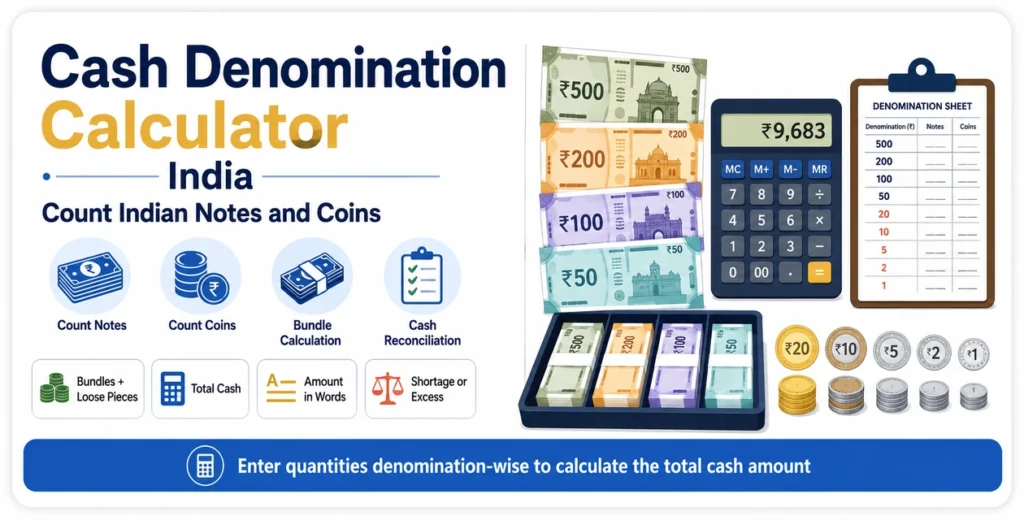
A denomination calculator helps count mixed Indian currency without doing every multiplication manually. Enter the number of notes or coins available for each value, such as ₹500, ₹200, ₹100 or ₹10. The calculator multiplies each denomination by its quantity and adds all subtotals to show the total cash amount.
It can also count bundles and loose pieces, show the amount in words and compare counted cash with an expected balance.
This calculator is designed to count cash already available by denomination. It does not automatically divide a target amount into the fewest possible notes and coins unless a separate cash-breakdown feature is provided.
Last reviewed: August 2026
Official reference: Reserve Bank of India
Table of Contents
What Is a Denomination Calculator?
A denomination is the face value printed on a banknote or coin. For example, ₹500, ₹100, ₹10 and ₹1 are different Indian currency denominations. A denomination calculator finds the value of mixed cash using a simple formula:
Denomination × Quantity = Subtotal
Suppose there are eight ₹200 notes. Their subtotal is:
₹200 × 8 = ₹1,600
The same calculation is completed for every entered note and coin. All denomination-wise subtotals are then added to produce the grand total.
Unlike an ordinary calculator, it organises every value in a denomination-wise cash sheet.
The result is only as correct as the quantities entered. The tool cannot see the physical cash, check whether a bundle contains the stated number of notes or identify a counterfeit note.
Highlights of the Cash Denomination Calculator
The tool counts notes and coins, combines bundles with loose pieces and calculates every subtotal. It can show total pieces, Indian number formatting, the amount in words and any shortage or excess against expected cash. Available copy, print, download and reset controls make the result easier to reuse. Its compact layout supports mobile and keyboard entry.
How to Use the Online Denomination Calculator
- Separate the physical cash into groups of the same denomination.
- Enter the number of full bundles and loose notes or coins in the correct rows.
- Check the automatically calculated total pieces for each denomination.
- Review each subtotal and compare it with the physical stack.
- Enter the expected cash amount if shortage or excess must be checked.
- Copy, print or download the summary, or use Reset for a fresh count.
For a simple count, use only the loose-piece fields. Enter 12 for twelve ₹500 notes, not 6000.
Real Cash Denomination Calculation Example
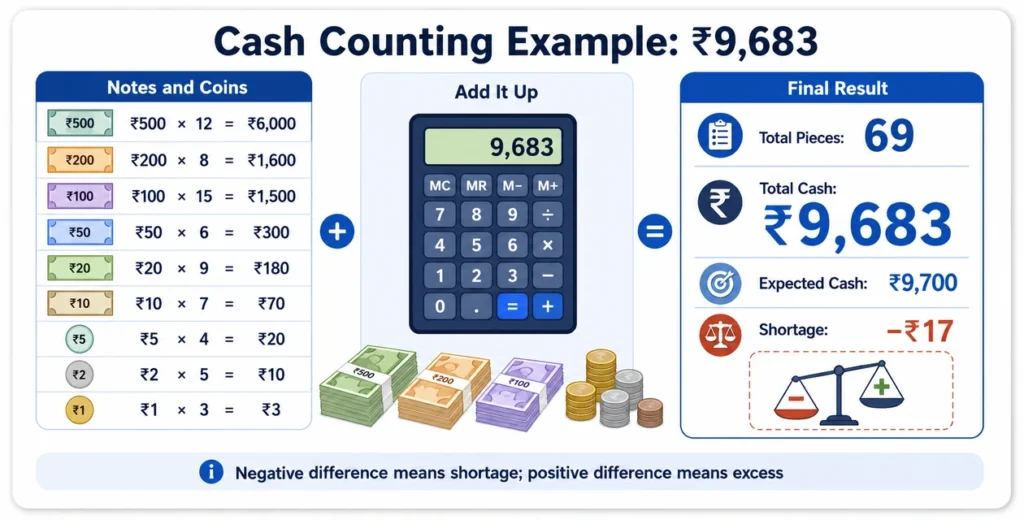
Assume the following notes and coins are counted at a shop counter:
| Denomination | Quantity | Subtotal |
|---|---|---|
| ₹500 | 12 | ₹6,000 |
| ₹200 | 8 | ₹1,600 |
| ₹100 | 15 | ₹1,500 |
| ₹50 | 6 | ₹300 |
| ₹20 | 9 | ₹180 |
| ₹10 coins | 7 | ₹70 |
| ₹5 coins | 4 | ₹20 |
| ₹2 coins | 5 | ₹10 |
| ₹1 coins | 3 | ₹3 |
| Total | 69 pieces | ₹9,683 |
The final calculation is:
₹6,000 + ₹1,600 + ₹1,500 + ₹300 + ₹180 + ₹70 + ₹20 + ₹10 + ₹3 = ₹9,683
Amount in words: Nine Thousand Six Hundred Eighty-Three Rupees Only
If the expected closing cash is ₹9,700, the reconciliation is:
Counted cash − Expected cash = Difference
₹9,683 − ₹9,700 = −₹17
The negative result means the counted cash is short by ₹17. A positive result would mean excess cash, while zero would mean the counted and expected amounts match.
Indian Currency Denominations Supported
The calculator may keep commonly used denominations visible and place uncommon or withdrawn denominations under optional fields.
| Status | Denominations |
| Commonly used banknotes | ₹500, ₹200, ₹100, ₹50, ₹20 and ₹10 |
| Legal-tender coins | ₹20, ₹10, ₹5, ₹2, ₹1 and 50 paise |
| Less commonly encountered notes | ₹1, ₹2 and ₹5 |
| Withdrawn from circulation but still legal tender | ₹2,000 |
| Not legal tender | Specified old ₹500 and ₹1,000 notes; coins of 25 paise and below |
RBI states that coins of 50 paise, ₹1, ₹2, ₹5, ₹10 and ₹20 continue as legal tender. Coins of 25 paise and below stopped being legal tender from 30 June 2011. The details are available in RBI’s directions on the exchange of notes and coins.
Cash Reconciliation: Shortage and Excess
Cash reconciliation compares physical cash with the amount expected from records.
Expected closing cash = Opening cash + Cash received − Cash paid
The calculator then compares this expected figure with counted cash:
Difference = Counted cash − Expected cash
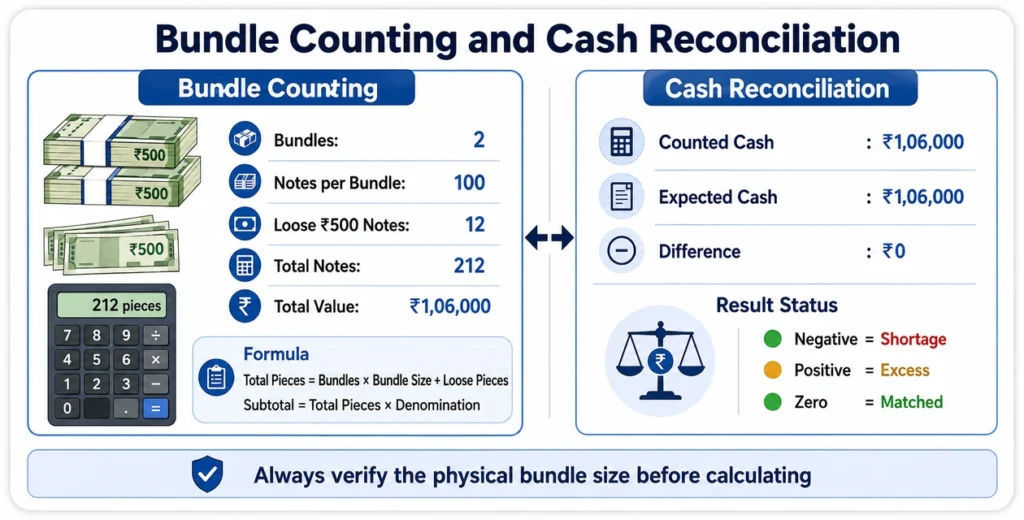
- A negative difference means a shortage.
- A positive difference means an excess.
- A zero difference means the two amounts match.
A difference may result from a wrong quantity, unrecorded payment, incorrect change or record error. Count the cash again before finalising the sheet.
Who Can Use a Cash Calculator?
Shopkeepers and cashiers can check daily or shift-closing cash. Bank and office staff can prepare denomination statements. NGOs and event organisers can count collections, while households can count savings or event cash.
It does not replace supporting records or a second physical count for large amounts.
How Bundle Counting Works
The calculator combines bundles and loose notes using:
Total pieces = (Number of bundles × Notes per bundle) + Loose notes
Then:
Subtotal = Total pieces × Denomination
For example, suppose there are two bundles of ₹500 notes, each set to 100 notes, along with 12 loose notes:
(2 × 100) + 12 = 212 notes
212 × ₹500 = ₹1,06,000
Keep the bundle size editable and verify every physical bundle.
Cash Denomination Calculator vs Cash Counting Machine
| Online calculator | Cash counting machine |
| Calculates from quantities entered | Physically counts inserted notes |
| Requires manual quantity entry | Automates physical piece counting |
| Creates a denomination-wise record | May produce a physical count report |
| Cannot inspect a bundle | Counts the notes placed in the machine |
| Cannot authenticate currency | Some machines include detection features |
An online calculator cannot detect counterfeit, damaged, soiled or mutilated notes.
Tips for Accurate Cash Counting
- Separate all notes and coins before entering quantities.
- Keep every denomination in its own stack or tray.
- Count large bundles at least twice.
- Match every displayed subtotal with the physical cash.
- Reconcile the grand total with the expected balance.
If a shortage or excess appears, recount from the beginning instead of changing quantities only to make the total match.
Is the ₹2,000 Note Included?
RBI withdrew ₹2,000 banknotes from circulation on 19 May 2023, but they continue to be legal tender. Deposit and exchange arrangements are subject to RBI’s current instructions, so the latest official guidance should be checked before visiting a facility. For normal cash counting, ₹2,000 can remain an optional denomination.
Refer to RBI’s current ₹2,000 banknote withdrawal guidance for deposit or exchange instructions.
Frequently Asked Questions
What is a denomination calculator?
It multiplies each currency value by its quantity and adds the subtotals.
How do I calculate cash denominations?
Multiply every denomination by its pieces, then add all subtotals.
Which Indian denominations are supported?
Common notes and legal-tender coins are included. Less-common notes and ₹2,000 may appear in optional rows.
Does the calculator count coins?
Yes. Enter the number of coins in the relevant denomination rows.
Can it calculate bundles and loose notes?
Yes. It combines bundles, an editable bundle size and loose pieces.
How many notes are in one bundle?
The default may be 100, but the physical bundle and selected size must be checked.
What is a cash shortage or excess?
Cash below the expected amount is a shortage; cash above it is an excess.
Is the ₹2,000 note still legal tender?
Yes. RBI withdrew it from circulation, but it continues as legal tender.
Can the calculator detect counterfeit notes?
No. It only calculates the values entered and cannot inspect physical currency.
Is entered cash information stored?
The calculator should process the entered quantities inside the browser without sending them to a server. Check the website’s privacy notice before entering sensitive cash records, especially on a shared device.
Conclusion
A denomination calculator totals Indian notes and coins, counts bundles and checks cash against an expected balance. Review every quantity because the result depends on the entered numbers. For large collections, use a second physical count and proper records.
Disclaimer
This tool performs calculations using the quantities entered. It does not inspect physical currency, confirm bundle contents, identify counterfeit notes or decide whether damaged currency is acceptable. Currency status and exchange facilities may change; refer to the latest RBI guidance for official information.